Project 05 of 12 Design study Business design · Sustainability · Product concept
A farm within reach
Plantopia
What if an unused urban space could become someone’s local farm? Plantopia explores the service and digital tools that would connect property owners, growing systems and people seeking a more personal harvest.
At a glance
The study connects two perspectives: commercial-space owners seeking a use for idle property, and shoppers seeking more control over their food. I mapped the proposed ecosystem and service journey, then designed an AR setup flow and mobile management screens. The work makes installation, growth management and routes to consumption or sale part of one proposition.
- Context
- Local food and unused commercial space
- Role
- Research and product design
- Concept
- Digitally managed vertical farms
- Outputs
- Ecosystem, journey, AR setup and mobile UI
The work, up close
Project artefacts.
05 images · Select to explore
Inside the work · Original product concept · digitally managed farming
Design the farm as a connected service, from finding space to managing the harvest.
The challenge
Explore a service linking underused commercial space with demand for locally grown food, and make the setup and management of a personal farm understandable.
The reasoning
The concept brings together the space owner, the growing system and the food customer. The ecosystem and journey expose the physical services that must support the digital controls.
The trade-off
A simple interface can make the proposition approachable, but the service still depends on installation, agricultural performance and ongoing operations. Those are the central feasibility questions for the concept.
01Connect the two sides of the opportunity
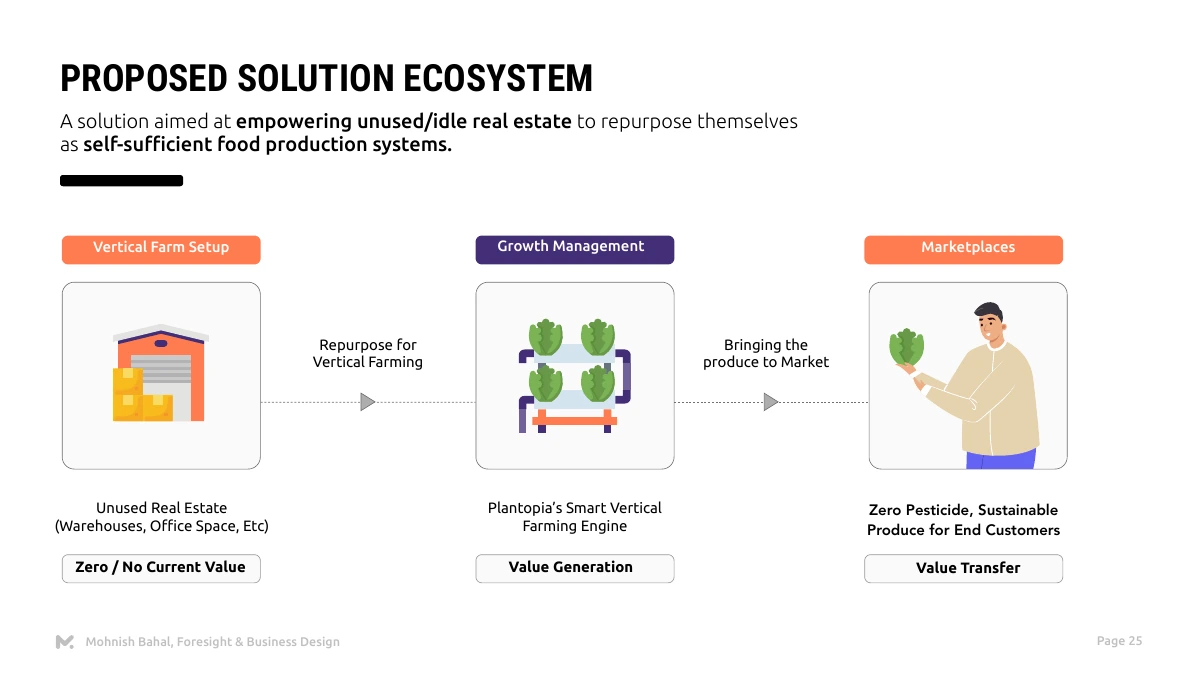
Mapped unused property, vertical-farm setup, growth management and routes to consumption or sale.
Why this direction
The value of the proposition depends on how these participants and services work together.
02Include the physical steps in the journey
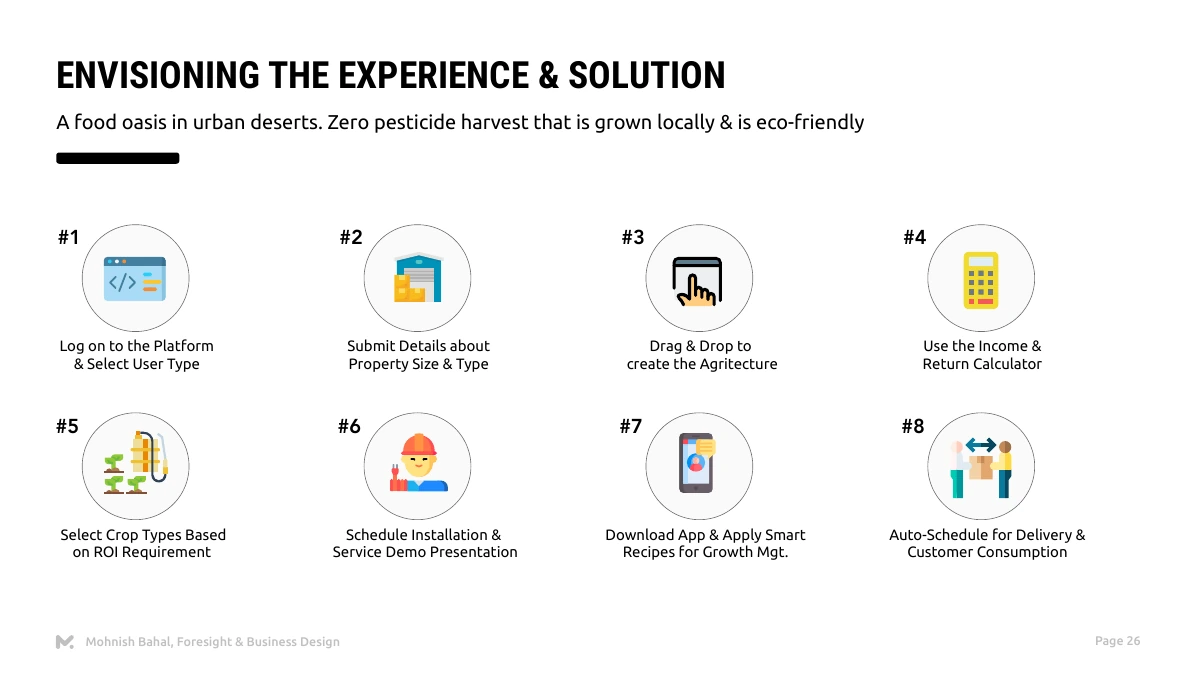
Designed the sequence through property details, layout, crop choice, installation, growth and delivery.
Why this direction
The app experience must connect to what actually happens in the space and to the harvested food.
03Make setup something a person can inspect
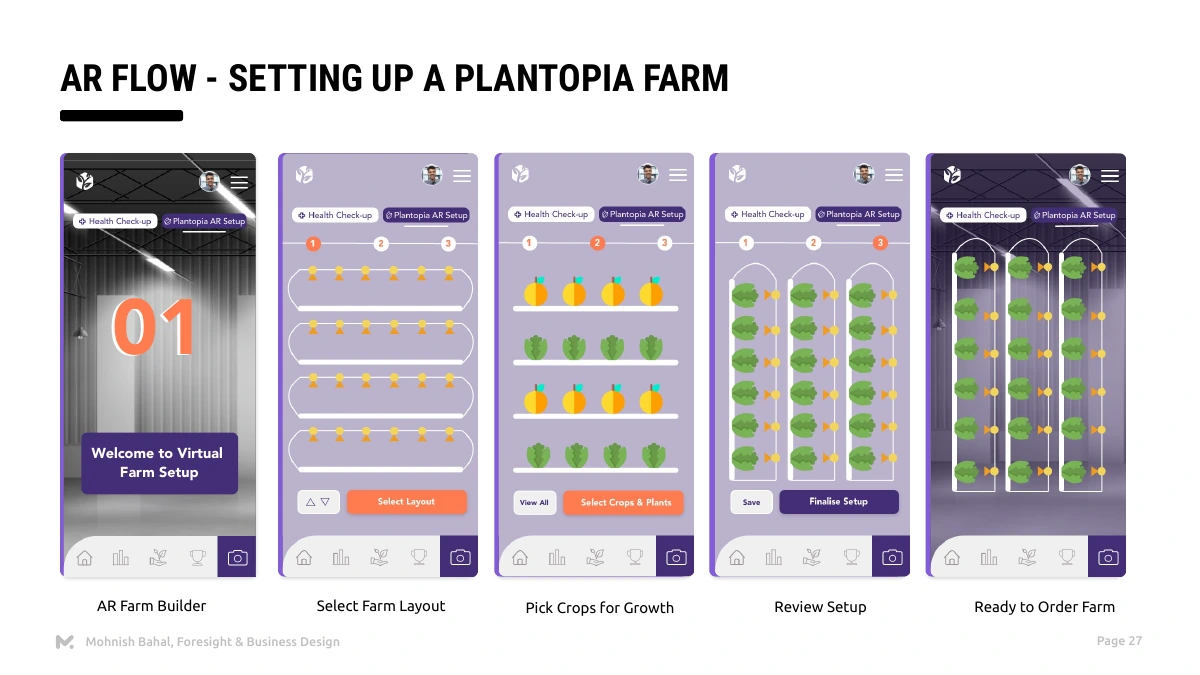
Proposed an AR flow for selecting a layout and crops, reviewing the arrangement and preparing an order.
Why this direction
A spatial representation makes an unfamiliar installation easier to consider.
04Turn complexity into visible status and actions
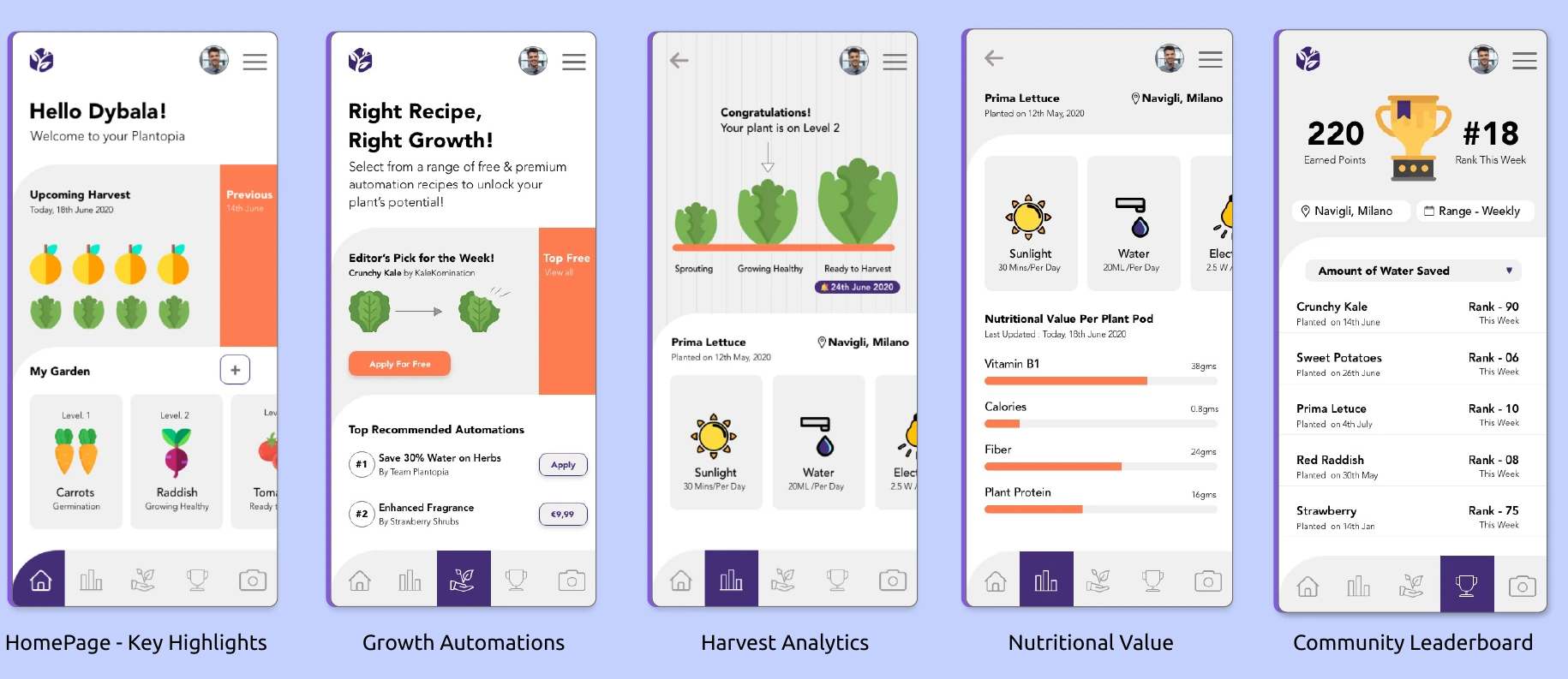
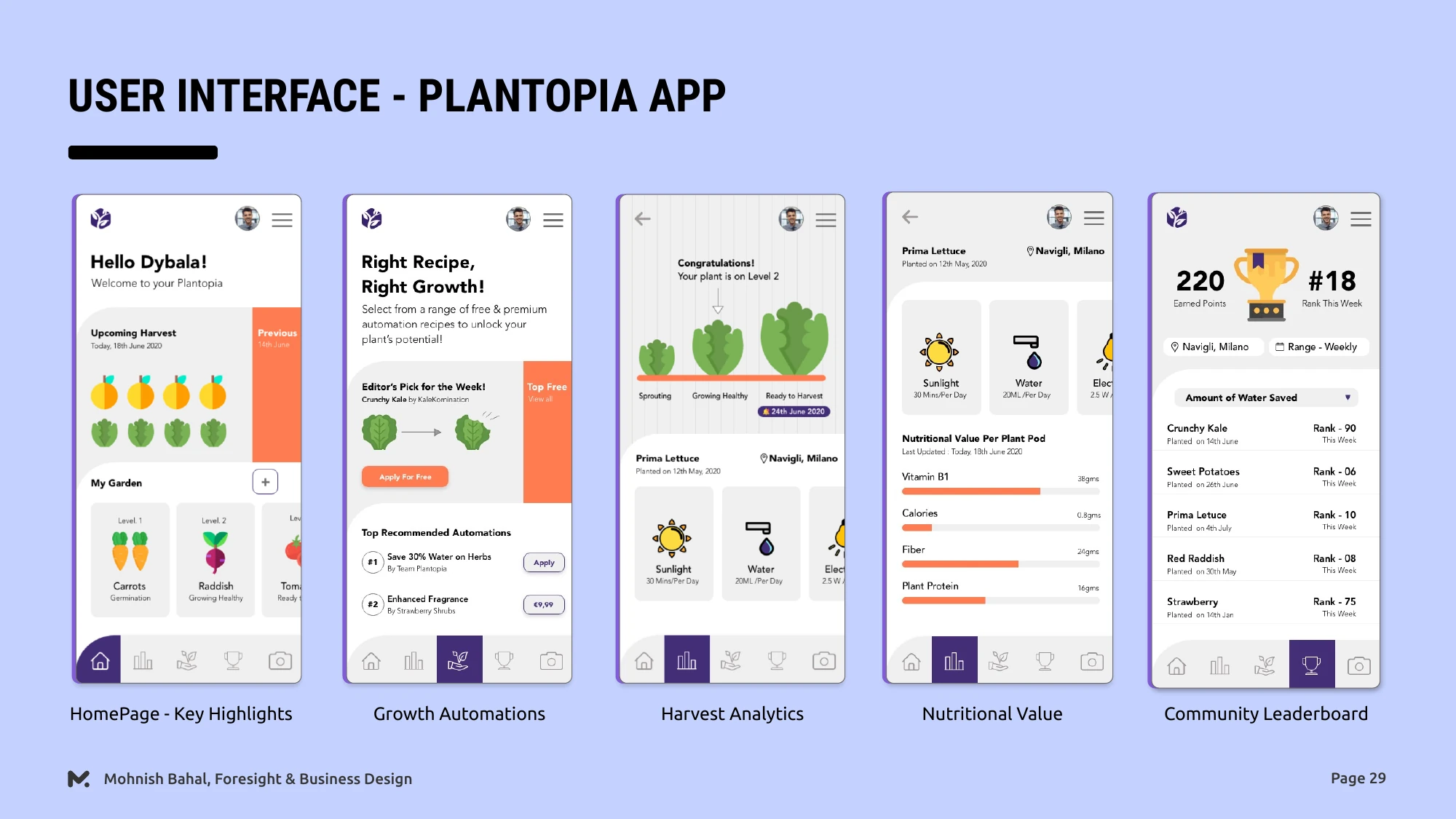
Designed mobile views for garden highlights, growth automations, harvest analytics and nutritional information.
Why this direction
Everyday management needs a clear picture of what is happening and what needs attention.
The opportunity
Connect two needs that usually sit apart.
Plantopia began with a brief about disrupted food supply chains and growing interest in local food during the pandemic. My role was to define the research scope, identify user problems, hypothesise solutions and design the product offering and experience.
The study connects two perspectives: a commercial-space owner seeking a productive use for underoccupied property, and a food shopper seeking more control over where and how food is grown.
Business design
Make the whole service visible.
The proposed ecosystem connects unused real estate with vertical-farm setup, growth management, and a route to personal consumption or sale through marketplaces. It treats the farm as a service system rather than a dashboard alone.
The design-thinking canvas and ecosystem map bring the participants and dependencies into view. They connect the promise of local food with the practical services needed to set up, maintain and operate a farm.
Service journey
Design the steps before and after installation.
The proposed journey runs from selecting a user type and entering property details to designing a layout, considering crop choices, scheduling installation and managing growth. It continues through delivery and consumption.
This makes the digital and physical relationship explicit. A useful interface must connect to the service that installs, supports and harvests the farm.
AR setup
Make an unfamiliar system easier to imagine.
The AR flow proposes a visual way to select a farm layout, choose crops, review the arrangement and prepare an order. It brings an abstract farming proposition into a representation of space and setup.
The concept screens make the setup sequence concrete: choose a layout, understand the crop options, review the arrangement and prepare for installation.
Everyday management
Help a person understand what needs attention.
The mobile interface covers garden highlights, growth automations, harvest analytics, nutritional information and a community leaderboard. It explores how to make a complex growing system more legible to someone managing it alongside daily life.
The interface brings growth status, recommended actions and harvest information into one view, helping a person understand both the current state and the next useful action.
Reflection
The interface is one part of the proposition.
Plantopia’s strongest question is how a digital product could coordinate an unfamiliar physical service. The work connects the user proposition, business ecosystem, setup journey and day-to-day controls.
The next validation priorities are installation feasibility, agricultural performance and demand from property owners and food customers. Those questions connect the digital proposition with the physical service it depends on.
Proposed farming service and interface designs. Environmental targets and screen data are illustrative.